The Soapmaker
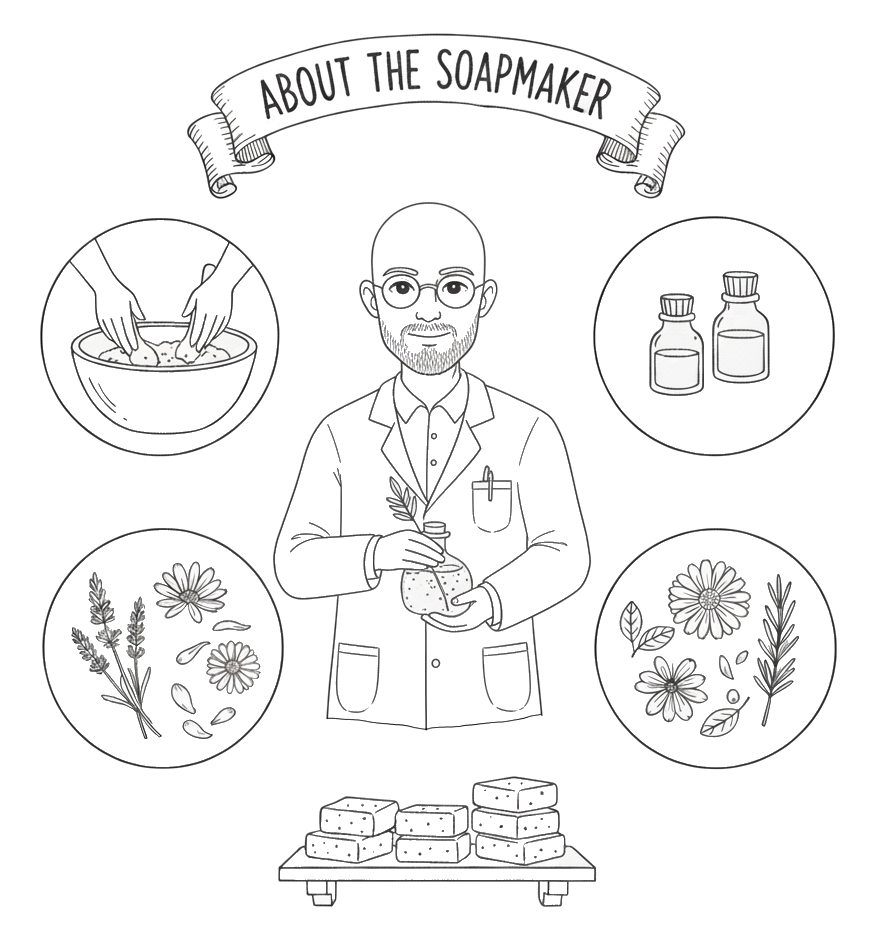
The soapmaker isn’t just an engineer — they’re a curious maker who loves tinkering and exploring new possibilities. Their adventure into soapmaking actually started in the kitchen, while experimenting with pretzel recipes. To get that perfect golden crust, bakers dip pretzels in food‑grade sodium hydroxide (better known as lye) before baking. Lye is a powerful alkali, and that sparked a thought: what else can lye do? The answer turned out to be soapmaking!
Soap is created through a process called saponification. In simple terms, fats or vegetable oils (which contain triglycerides) are mixed with lye. This reaction transforms the oils into soap molecules (carboxylate salts) and glycerol. Glycerol is a natural humectant — it helps draw moisture into your skin. While commercial soaps often remove glycerol, handmade soaps keep all that moisturizing goodness intact.
Every batch of handmade soap is carefully measured and balanced. The recipe includes specific proportions of butters and oils, some of which remain unsaponified to add extra nourishment. The result is a bar that doesn’t just clean — it moisturizes, protects, and feels great on your skin.